Support Grows in Congress for ‘Block the Bombs Act’ Seeking Restrictions on U.S. Arms Transfers to Israel
Growing number of lawmakers back legislation aimed at limiting the transfer of offensive weapons to Israel amid concerns over civilian casualties and regional conflict.
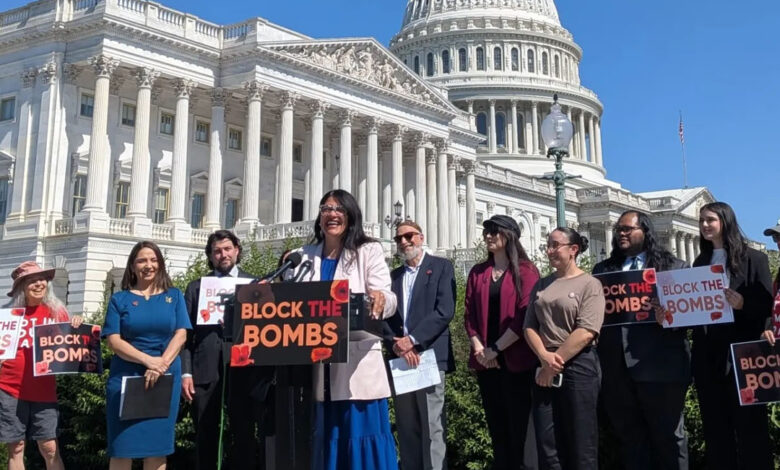
Momentum is building in the U.S. Congress behind the proposed “Block the Bombs Act,” legislation that seeks to restrict the transfer of certain offensive weapons and munitions from the United States to Israel. The bill has attracted growing support from lawmakers who argue that Washington should exercise greater oversight over how U.S.-supplied weapons are used in ongoing military operations and ensure compliance with international humanitarian standards.
The legislation was introduced amid increasing scrutiny of U.S. military assistance to Israel as the conflict in Gaza continues to generate international concern. Supporters of the bill contend that American-made weapons should not be used in ways that contribute to large-scale civilian casualties or the destruction of civilian infrastructure. They argue that Congress has a responsibility to ensure that military aid aligns with U.S. laws, foreign policy objectives, and humanitarian principles.
Backers of the proposal say the legislation is intended to prevent the transfer of specific categories of offensive weaponry, including heavy bombs and certain types of munitions that have been the subject of controversy during military operations in densely populated areas. Advocates believe stronger congressional oversight would increase transparency and accountability while encouraging efforts to minimize civilian harm during armed conflicts.
The debate surrounding the bill reflects broader divisions within U.S. politics over America’s role in the Middle East and its long-standing security partnership with Israel. While support for Israel remains strong among many lawmakers from both major political parties, an increasing number of members of Congress have called for closer examination of military assistance programs, particularly in light of humanitarian concerns raised by international organizations and human rights groups.
Opponents of the legislation argue that restricting arms transfers could undermine Israel’s ability to defend itself against security threats. They maintain that Israel faces complex regional challenges and requires continued access to advanced military equipment to deter attacks and protect its citizens. Critics also warn that limitations on military assistance could weaken a key U.S. ally at a time of heightened instability across the Middle East.
The growing support for the “Block the Bombs Act” comes amid a broader reassessment of U.S. foreign policy priorities and military engagement in the region. Several recent congressional initiatives have sought greater transparency regarding military aid, civilian casualty assessments, and the strategic objectives of American security partnerships abroad. Analysts view these developments as evidence of an evolving debate within Congress regarding the balance between supporting allies, safeguarding human rights, and protecting U.S. strategic interests.
Although the bill still faces significant legislative hurdles before it could become law, its expanding base of support highlights shifting political dynamics in Washington. The proposal has intensified discussions about the future of U.S.-Israel relations, the role of Congress in overseeing foreign military assistance, and the broader implications of American involvement in regional conflicts. As lawmakers continue to debate the issue, the legislation is expected to remain a focal point in ongoing discussions over U.S. foreign policy, national security, and humanitarian accountability.